
We’ll get back to you soon



2025-11-06 00:30:05
Latest independent lab tests (Current independent lab tests show measured capacities for common 18650 cells can differ from manufacturer-rated values by as much as 15–20% under real-world test conditions.) This variance matters: designers risk undersizing power systems, consumers face shorter runtimes than advertised, and safety inspectors must account for capacity-related thermal and abuse responses. This report focuses on measured capacity, how battery specs are rated, standard test methods, head-to-head comparisons, and actionable buying and design guidance. The term 18650 battery is used deliberately to center the discussion on the most common cylindrical cell format encountered in portable and pack‑scale applications.
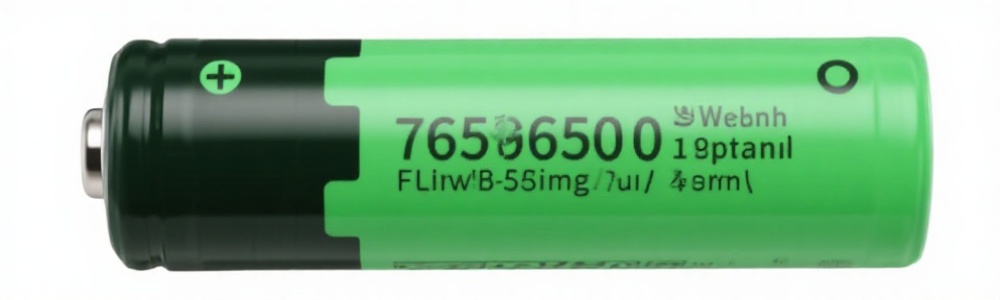
Point: An 18650 cell is a cylindrical lithium-ion cell defined by nominal physical dimensions and a set of common chemistries that determine voltage and energy density. Evidence: The format name encodes dimensions: 18×65 mm (diameter × length) and typical nominal voltages depend on chemistry: ~3.2 V for LFP, ~3.6–3.7 V for nickel‑based cathodes (NCR/NCA/NCM). Explanation: These values dictate pack design (mechanical spacing, cell holders, thermal paths) and system voltage calculations. Link: Use a concise specs table for quick reference below.
| Attribute | Typical Value / Range | Notes |
|---|---|---|
| Physical size | 18 × 65 mm | Standard mounting and holders assume this footprint |
| Nominal voltage | 3.2 V (LFP) — 3.6–3.7 V (NCM/NCA) | Affects pack string count and converter design |
| Common chemistries | NCR / NCA / NCM / LFP | Tradeoffs: energy density, cycle life, safety |
Point: Datasheets present a standard set of parameters that guide engineering decisions. Evidence: Typical entries include nominal capacity (mAh), maximum charge voltage (e.g., 4.20 V), continuous discharge current (A), internal resistance (mΩ), cycle life (cycles to X% retention), and operating temperature ranges. Explanation: Understanding each entry and its shorthand (e.g., "0.2C @ 20°C" for capacity tests, "IR" for internal resistance) is essential; designers must check test conditions because a rated mAh without the test C-rate and temperature is incomplete. Link: When datasheet items omit test conditions, treat rated numbers as optimistic until verified experimentally.
Point: Accurate specs determine suitability across diverse uses: power tools, e‑bikes, flashlights, and custom battery packs. Evidence: In high‑drain tools, sustained current capability and low internal resistance prevent voltage sag and overheating; in energy-storage and e‑bikes, true capacity and cycle life govern range and lifecycle cost. Explanation: Overestimating capacity leads to packs that don’t meet runtime targets; underestimating discharge capability risks thermal events. Link: Real-world examples include packs that overheat under continuous loads due to mismatched continuous discharge ratings and consumer flashlights that show large runtime shortfalls when cells measured in low‑C conditions are later used under high‑C loads.
Point: Manufacturers typically measure capacity under controlled, industry‑standard test points that maximize reported mAh. Evidence: Common protocol: CC‑CV charge to 4.20 V, rest, discharge at a low C‑rate (e.g., 0.2C) at 20–25°C to a defined cutoff (e.g., 2.5–3.0 V). Explanation: Low discharge rates and moderate temperatures produce higher measured capacities; higher C‑rates or colder conditions reduce delivered Ah. Link: Variability between vendors arises because some publish capacity at 0.2C while others use 0.5C or different cutoffs—compare test conditions before trusting rated numbers.
Point: Cells carry both continuous discharge ratings and higher short‑term pulse ratings; the test methods differ. Evidence: Continuous rating (e.g., 5 A) is measured as sustained discharge at that current with thermal limits; peak or pulse ratings (e.g., 10–20 A for seconds) are characterized via short bursts with thermal recovery. Explanation: A cell marketed for "high capacity" often achieves its mAh at low C but cannot sustain high continuous current; conversely, high‑drain cells trade some capacity for lower internal resistance and better sustained power. Link: Designers should match the required continuous current profile to the cell's continuous rating rather than pulse specs alone.
Point: Manufacturers specify operating temperature windows, thermal cutoffs, and cycle‑life definitions that affect real-world performance. Evidence: Cycle life is commonly reported as cycles to a percentage of initial capacity (e.g., 80% after X cycles) under defined charge/discharge regimes and temperatures. Explanation: Without standardized definitions, "500 cycles" can mean very different outcomes; temperature accelerates capacity fade and raises safety risk. Link: Call out ambiguous or missing datasheet specs—ask vendors for detailed cycle protocols and thermal test reports before critical deployments.
Point: Aggregated lab data shows distinct bands: high‑drain cells trade capacity for low internal resistance, while high‑capacity cells maximize mAh at low rates. Evidence: Typical measured ranges: high‑drain cells ~2000–2500 mAh, mainstream high‑capacity cells ~3000–3600 mAh, though measured values can vary by vendor and test conditions. Explanation: Present aggregated charts with sample sizes and reported variance (standard deviation). Link: When presenting results, always include number of samples and repeatability metrics so users can judge statistical significance.
Point: Deviations between rated and measured capacity commonly fall within −5% to −20% depending on conditions. Evidence: Causes include differing test C‑rates, temperature, cell aging, manufacturing variance, and counterfeit or re‑wrapped cells that misstate capacity. Explanation: Higher C‑rate use or lower temperatures typically lowers delivered Ah; some vendors rate at optimistic conditions to make marketing claims. Link: Use error bars and annotate protocols in any comparison to avoid misleading conclusions.
Point: Internal resistance (IR) and voltage sag under load directly affect usable capacity and performance. Evidence: Cells with higher IR exhibit larger voltage drop under current, reducing usable energy at a system cutoff. Explanation: Two cells with similar mAh at 0.2C may behave very differently at 2C due to IR differences; therefore IR correlates strongly with effective runtime in high‑power applications. Link: Include pulse‑IR and load‑profile graphs alongside capacity charts to provide a fuller picture.
Point: Reproducible results require calibrated cyclers, environmental control, and accurate sensing. Evidence: Recommended equipment: programmable battery cycler (±0.01 A resolution), temperature chamber (20–25°C control), precision current shunt or DAQ for verification, and calibrated voltmeters. Explanation: Calibration of current and voltage channels before tests and maintaining stable ambient temperature are critical—small temperature drift changes capacity readings. Link: Labs should document calibration certificates and environmental logs with each dataset.
Point: A clear, repeatable protocol minimizes inter‑lab variance. Evidence: Example protocol: CC‑CV charge to 4.20 V at 0.5 A (or 0.2C), CV until I
Point: Complement capacity tests with IR, cycle life, and basic safety checks for a comprehensive profile. Evidence: Pulse‑IR methods (short current pulses and differential voltage response) provide consistent IR metrics; cycle life tests use repeated CC‑CV profiles with periodic capacity checks; basic safety screening monitors for abnormal heating or swelling under defined abuse profiles. Explanation: Log all raw data, include outlier handling rules (e.g., remove cells exhibiting >10% deviation during initial conditioning) and provide standardized reporting formats to enable comparison across datasets. Link: Provide cycle‑life test schedules and IR measurement cadence in appendices when sharing results.
Point: Pitting representative cells under identical conditions highlights design tradeoffs. Evidence: Present 3–5 sample cells with measured mAh at 0.2C and 1C, rated mAh, continuous discharge rating, IR, and test conditions; use tables and graphs to show capacity vs C‑rate curves. Explanation: These comparisons help select cells: high‑capacity cells for low‑power, high‑drain for power tools or motors. Link: Show per‑cell repeatability (n≥3) and note any thermal management used during tests.
Point: Counterfeit cells often exhibit inconsistent performance signatures. Evidence: Red flags include inflated rated mAh not matching measured capacity, widely varying IR across a batch, and sudden capacity drops after a few cycles. Explanation: Simple checks: measure IR across samples, verify physical labeling and lot codes, and perform an initial capacity spot check before bulk acceptance. Link: Maintain a checklist for incoming inspection that includes measured Ah at a conservative C‑rate and IR thresholds.
Point: Match cell profile to application requirements rather than brand names. Evidence: For high‑drain devices, prioritize cells with low IR and conservative continuous current ratings even if mAh is lower; for long‑runtime portable applications, favor cells with high measured capacity at relevant C‑rates. Explanation: Frame recommendations by metrics (e.g., "choose cells with measured ≥X mAh at 1C and IR ≤ Y mΩ for motor drives") rather than manufacturer claims. Link: Provide objective tables linking application profiles to target cell metrics.
Point: A standardized vendor questionnaire reduces ambiguity and risk. Evidence: Verify rated capacity and the exact test conditions, continuous discharge rating, IR, cycle‑life claim with protocol, lot traceability, and MSDS. Explanation: Ask vendors for test reports and sample test data; acceptable tolerances depend on application—e.g., accept ±5% at the intended C‑rate for high‑reliability designs, be stricter for regulated or safety‑critical systems. Link: Keep a sample vendor questionnaire to speed procurement and ensure traceability.
Point: Conservative derating and robust pack management extend life and improve safety. Evidence: Rules of thumb: derate high‑capacity cells by 10–20% for continuous high‑C loads; specify a BMS with appropriate continuous current margin and passive or active thermal management depending on pack density. Explanation: Example: for a cell measured at 3500 mAh at 0.2C but with higher IR, use a 15% derating at continuous 1C to ensure acceptable temperature rise and cycle life. Link: Include fusing and cell‑level monitoring to prevent single‑cell failures from propagating.
Point: Periodic checks maintain pack health and inform replacement decisions. Evidence: Recommend periodic capacity spot checks (charge/discharge at a known C‑rate) and IR monitoring; flag cells for replacement when capacity falls below a threshold (commonly 70–80% of initial measured capacity) or IR rises above application limits. Explanation: Simple in‑field tests: charge to full, conduct a timed discharge at a moderate load and compare runtime to baseline; if runtime loss exceeds agreed threshold, schedule module servicing. Link: Define safe disposal procedures and recycling routes compliant with local regulations.
Measured capacity differences commonly range from a few percent to over 15% depending on test conditions, temperature, and cell history. Variance sources include the C‑rate used for rating, charge/discharge cutoffs, and whether the datasheet value reflects a fresh cell at 0.2C or a different protocol. For critical designs, require vendor test reports and perform independent spot checks under your actual expected load and temperature.
Ask for a detailed CC‑CV protocol: charge voltage and current, CV termination current, rest duration, discharge C‑rate and cutoff voltage, environmental temperature, and number of cycles used to determine reported capacity. Request mean and standard deviation across a reasonable sample size and calibration certificates for test equipment to ensure the reported battery ratings are comparable to your planned usage.
Simple lab checks include measuring initial capacity at a conservative C‑rate and sampling internal resistance across the lot; inconsistent IR or large variation in measured Ah are red flags. Verify physical lot codes, labeling, and request traceability documentation. If budget permits, perform a subset of cells through a short cycle test to detect early failures indicative of re‑wrapped or degraded cells.
 Leave a message
We’ll get back to you soon